Payment InfrastructureThe invaders became tenants.
Payment Infrastructure
The invaders became tenants.
Korea is, by one common measure, the most thoroughly carded society on earth — roughly 84% of transactions are cashless, and card payments average KRW 3.5 trillion a day. Underneath every tap runs a piece of plumbing most countries never built: the VAN, an independent middleman that owns the terminal, relays the authorization message and never touches the money. The layer cleared 26.40 billion transactions in 2025, the fee that funds it is set by regulation rather than by markets, and the wallet platforms that were expected to replace it have ended up building their newest terminal networks on top of it instead. This is a study of that machine through its largest operator, Korea's NICE Information & Communication.
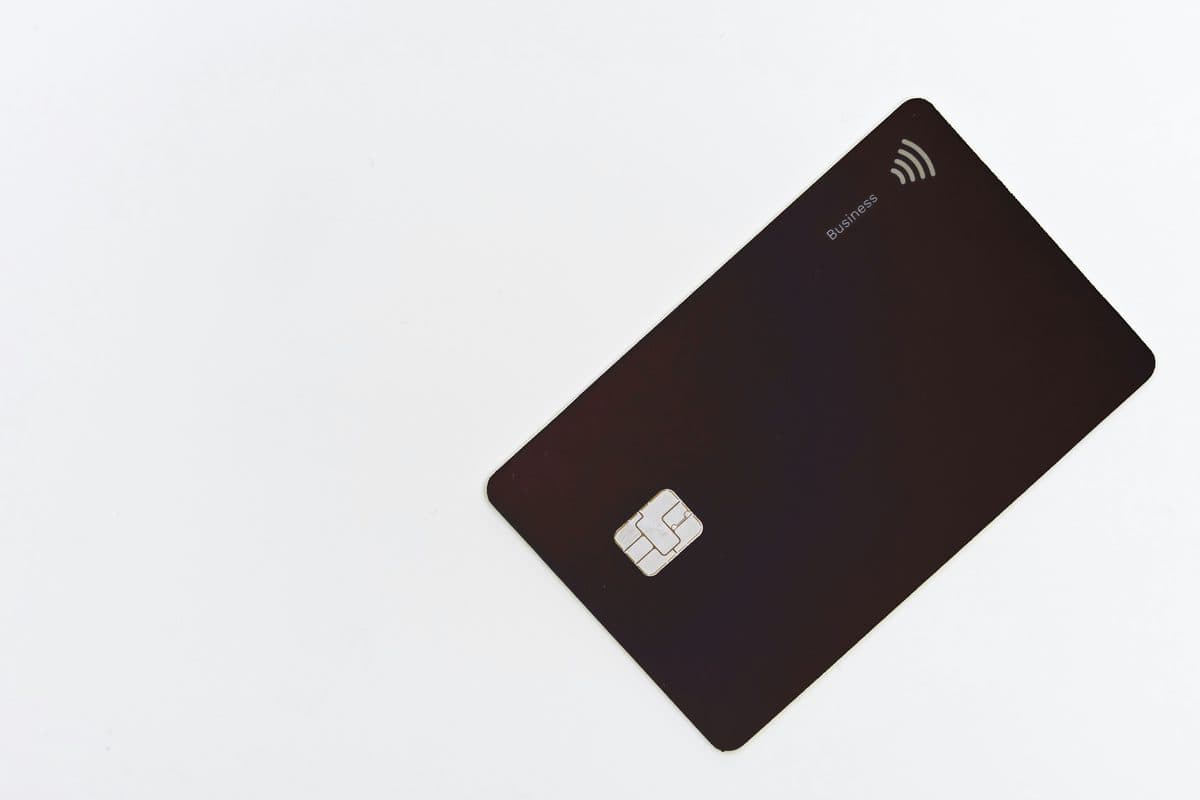
A contactless card — chip, antenna and nothing else — is the specimen this atlas follows. In the roughly two seconds after a tap, an authorization request crosses from the terminal to a VAN — a middleman that relays and validates the message but never holds the funds — on to the card issuer, and back. Korea's VAN layer carried 26.40 billion such round trips in 2025; the machinery is invisible precisely because it almost never fails.
Tap a card in Korea and, on the surface, nothing happens: a beep, a printed slip, done. Underneath, four short messages have crossed the country and come back — from the terminal to a middleman called a VAN, short for value-added network; from the VAN to the bank or card company that issued the card, which decides yes or no; and back along the same path, all in roughly two seconds by general industry estimate. Multiply that round trip by every card payment in the country and the scale of the machine emerges: Korea's VAN layer relayed 26.40 billion card authorizations in 2025, up from 20.64 billion in 2021. Almost nobody who uses it could name a single company in it.
That invisibility is worth correcting, because the layer underneath the tap is one of the more distinctive market structures in world payments. Twenty-five VAN companies were registered with Korea's Financial Supervisory Service as of November 2025, and 190 payment-gateway (PG) companies with the Financial Services Commission as of February 2026. The fee that funds the whole apparatus is set by regulation, on a schedule, after a formal cost calculation. And the wallet platforms that were widely expected to route around the old machinery have ended up building their newest terminals on top of it. What follows is a study of that machine — the journey of a single tap, the middleman layer that carries it, the regulated fee that pays for it, and the wallets renting space on it — read through the market's largest operator, NICE Information & Communication, which has led the VAN field every year since 2014.
The specimen's meter — card authorizations cleared, 2025
7.494bn
NICE I&C's processed transaction count in 2025 — a 28.4% share of all-VAN volume, up from 23.6% in 2021, and the #1 position every year since 2014. Twenty-five VAN companies were registered with the Financial Supervisory Service as of November 2025; the top thirteen carry roughly 98% of the traffic. Sources: DART filings (NICE I&C FY2025 annual report); biz.newdaily.co.kr (2024).
We use cookies to understand how our site is used so we can improve it. Necessary cookies are always on. You can accept all, reject all, or choose what to allow. Learn more
Two seconds of choreography, and nobody claps
The VAN's job is deliberately narrow. It relays and validates the transaction data between merchant and issuer, then gets out of the way; at no point does it hold the money. Settlement — the actual movement of funds between issuer and merchant — happens later, on a separate cycle, distinct from the instant yes-or-no of authorization. What the VAN adds around the relay is the merchant network itself: VAN companies recruit and manage card-accepting merchants on the issuers' behalf, deploy the terminals on their counters, and are paid a per-transaction fee by the issuers as their primary revenue.
The economics of that fee have been drifting against the layer. VAN compensation has shifted from a flat fee of roughly KRW 100–130 per transaction toward a variable rate of about 0.2% of the sale, as the card issuers' own profitability pressure passed through to their suppliers; by Financial Supervisory Service data, the major VAN operators' aggregate net profit fell 34% in 2020, to KRW 104 billion. And when the machine fails, it tends to fail at identity rather than at the relay: in June 2026 a wave of unauthorized overseas charges for ChatGPT subscriptions — about 858 reported cases, with aggregate losses cited at roughly KRW 250–400 million — was traced to a gap in supplementary authentication on certain cross-border transactions where no physical card is present. The pipes held; the doorway did not.
The only part of the machine a shopper ever touches. Korea's leading VAN designs and specifies the readers on the counter, then has outside manufacturers build them — hardware is a sideline in the accounts, with NICE I&C's payment-terminal line at KRW 16.87 billion in 2025, about 1.5% of standalone net revenue. The value sits in the relay network behind the glass.
The layer America never built
Korea's VAN industry exists because of a fork taken in 1986, when a company called KICC launched the country's first card VAN bundled with a reader it called Easycheck. When card payments went electronic, someone had to carry the authorization message between the shop and the bank. In the United States that plumbing was absorbed by acquiring banks and card networks; Korea outsourced it to independent specialists, and a whole industry grew in the gap. The structural difference persists. Korea runs a three-party card scheme — issuer and acquirer are the same institution — with nine domestic card-issuing networks and roughly thirteen VAN operators sitting between merchants and issuers as the merchant-facing relay, in the UK Payment Systems Regulator's description of the system. Visa and Mastercard appear only on cross-border transactions; domestic Korean card payments never touch them.
The census of the layer is short and concentrated. Of the 25 registered VAN companies, the top thirteen carry roughly 98% of the traffic, and a shopper could stand at a till for a year without learning any of their names — KICC, KSNET, Smartro, KIS I&C, Kovan. NICE I&C has held the #1 position by processed transactions continuously since 2014, and its lead has widened: from 23.6% of all-VAN volume in 2021 to 27.0%, 27.7%, 27.8% and finally 28.4% in 2025 — 7.494 billion authorizations in a single year — while the industry's total volume grew by more than a quarter.
Korea's VAN layer keeps growing — and its leader keeps taking a larger share of it.All-VAN processed card-authorization volume (bars, billions of transactions) grew from 20.64 billion in 2021 to 26.40 billion in 2025 — the two endpoints of the annual report's five-year table. The line is NICE I&C's share of processed volume at those endpoints, 23.6% in 2021 and 28.4% in 2025; the sourced year-by-year path between them (27.0%, 27.7%, 27.8%) is given in the text above. Source: DART filings (NICE I&C FY2025 annual report, five-year processed-volume and share table).
Consolidation has done much of the sorting, and one corporate group has done most of the consolidating. NICE spun its payment-gateway business into a subsidiary, NICE Payments, in 2016; that subsidiary absorbed a rival, JTNet, in 2022; and on 1 October 2025 the gateway operation was folded back into NICE I&C through a small-scale split-merger. The next move was agreed in June 2026: the purchase of a 96.1% stake in KIS Information & Communication — a sister VAN and PG operator founded in 1992, a fellow NICE Group affiliate — from parent NICE Holdings for KRW 112.29 billion; closing was scheduled for 2 July 2026. Market commentary flagged the result as unusual even by Korean group standards: one corporate group owning two of the country's larger VAN and payment-gateway operators outright.
The most regulated 1.45% in Korean commerce
The fee a Korean merchant pays to accept a card looks like a market price, and is not one. It is set by policy, on a schedule, after a formal cost calculation — and it has fallen for two decades. At the 2007 peak the average merchant card fee was about 4.5%. The turning point came in 2012, when a revision to the Specialized Credit Finance Business Act created a preferential rate for small merchants and the reasonable-cost recalculation framework behind every reset since; at the original rollout the small-merchant rate fell from 1.8% to 1.5%, the system-wide average from 2.1% to 1.9%, and roughly 96% of all merchants saw their fee cut.
Annual card sales
Fee ceiling
Up to KRW 300m
0.4%
KRW 300–500m
1.0%
KRW 500m–1bn
1.15%
KRW 1–3bn
1.45%
Above KRW 3bn (general merchants)
Outside the preferential regime
Korea's preferential merchant-fee ceilings by annual card sales, effective 14 February 2025 — the latest reset under the reasonable-cost recalculation framework created by the 2012 revision of the Specialized Credit Finance Business Act. About 95.8% of all card-accepting merchants sit inside these preferential tiers; the February 2025 round cut rates a further 0.05–0.10 percentage points for merchants under KRW 3 billion in annual sales, an estimated KRW 300 billion a year of relief across roughly 3.046 million small and micro merchants. Sources: Financial Services Commission (2024-12-17; 2012-07-04); FSC data via secondary summaries.
Two features of the regime are easy to miss. First, someone pays for the relief: across the historical recalculation rounds, more than 30% of larger general merchants — those above KRW 3 billion in annual card sales — have seen their own rate rise at each reset, a cross-subsidy written into the formula. Second, the reset now comes half as often: from the 2025 round, the recalculation cycle was extended from every three years to every six, holding the current structure in place for longer. The VAN's own slice of the fee is set in a different room entirely. NICE I&C negotiates its wholesale VAN and PG rates individually and annually with each card issuer, and its annual report declines to disclose the results as trade secrets — the most regulated fee in Korean commerce contains, inside it, a price nobody quotes.
The merchant card fee — 2007 peak to today's preferential tiers
4.5% → 0.4–1.45%
At the 2007 peak the average merchant card fee was about 4.5%. After the 2012 Specialized Credit Finance Business Act revision and successive cost-based resets, preferential-tier ceilings now run from 0.4% to 1.45% by merchant size — and from 2025 the recalculation cycle stretches from three years to six. Sources: FSC (2012-07-04; 2024-12-17); Sisa Journal-e.
The invasion that rented the building
When Naver, Kakao and Toss launched simple-pay wallets — phone apps that pay by scanning a code or tapping a stored card — the obvious expectation was that they would route around the card-and-VAN machinery altogether. The scale is real: in 2025 Korea's simple-pay sector handled a daily average of 35.57 million transactions worth KRW 1.1 trillion, with one market-research estimate putting Naver Pay at roughly 51.5% of that volume, ahead of Kakao Pay at about 25.1% and Toss Pay at 13.2%. But scale is not substitution, and the routing tells a different story. A payment meets the VAN layer in one of three ways — and the third path, the true bypass, is the one the wallets have largely declined to take.
Route
Mechanism
Documented marker
Ride through it
The wallet mimics or tokenizes a card; the full card-and-VAN rail runs underneath
Samsung Pay's MST mimicked a card swipe on existing magnetic-stripe readers
Clip it
Issuers take the data-capture step in-house via direct EDC
Shinhan, Samsung, Lotte and Hana Card had each shifted part of their acquiring workflow by 2021; a Supreme Court ruling upheld the practice; estimated 60% saving on an issuer's VAN-fee outlay
Skip it
Account-to-account transfer over the open-banking rail, no card involved
Live nationwide since December 2019
Three ways a payment meets Korea's VAN layer. Most simple-pay volume still rides the full card rail; direct electronic data capture (EDC) clips the VAN's data-capture role out of some issuer workflows; the account-to-account open-banking rail, run by the Korea Financial Telecommunications & Clearings Institute, bypasses cards entirely. Sources: etnews.com (2024-07-16); m-i.kr (2021-12-14); Bank of Korea / KDI policy summaries.
The striking part is how little of that third path the wallets have actually taken. Rather than lay a rail to replace the VAN, they built terminals on top of it. Naver Pay's Npay Connect unattended-terminal network — supporting cash, card, QR, simple pay, NFC and facial-recognition payment — reached 100,000 merchant locations within seven months of its November 2025 launch, 52,000 of them added in the trailing three months alone, and it is supplied through partnerships with the VAN incumbents NICE I&C, KICC and KIS I&C. Toss's rival Toss Front network had passed 370,000 locations across all 226 Korean municipalities by early June 2026, and its FacePay facial-recognition feature crossed 6 million cumulative sign-ups in May. A single national Standard QR specification, finalized by the financial regulator in January 2025, is meanwhile making one merchant scanner interoperable across Kakao Pay, Naver Pay, Toss and the card-issuer wallets. The rails held; the newcomers became tenants.
“Korea's card rail is a utility that never advertises: a middleman that owns the terminal, carries the message and never touches the money, paid a fee shaped by regulation on a published schedule. The decisive questions in this market are never about the technology on the counter — they are who gets to sit in the message path, and what the formula pays them for being there.”
— Nathan Research Group, Payment Rails Series N°01
The specimen: a VAN that is now mostly a gateway
Read NICE I&C the way a nurse reads a monitor and the vital signs describe a payments utility that has changed shape. Founded in May 1988 as the credit-card division of a credit-information company, in the VAN authorization-relay business since 1991 and KOSDAQ-listed since 2000, it booked consolidated revenue of KRW 1,094.68 billion in its 2025 financial year — up from KRW 975.1 billion the year before — with operating profit of KRW 55.29 billion. The first vital sign is the revenue mix, and it has inverted: the VAN business that gives the company its identity now supplies only 29.0% of revenue, while payment-gateway processing — the online-checkout business — supplies 65.1%, and POS devices the remaining 5.9%. On top sits a tax-refund service for foreign tourists, where the company holds an estimated number-two position.
The second vital sign explains the first. The October 2025 split-merger that folded NICE Payments' payment-services division back into the parent moved, on a 30 June 2025 pro-forma basis, roughly 90% of the subsidiary's balance sheet: NICE I&C's assets grew from KRW 449 billion to KRW 1,097 billion while the shell left behind shrank from KRW 776 billion to KRW 80 billion. No new shares were issued, because the parent already owned the subsidiary outright. In the first quarter of 2026 the enlarged company reported KRW 285.69 billion of consolidated revenue, its VAN share easing slightly to 27.9%. Gateway scale is a different contest from VAN scale, though. In the 190-company PG field, the VAN leader ranks a distant fourth.
Rank
PG operator
2024 revenue
1
NHN KCP
KRW 1.034tn
2
Toss Payments
KRW 816.5bn
3
KICC
KRW 755bn
4
NICE I&C
—
Korea's payment-gateway segment by 2024 revenue. 190 PG companies were registered with the Financial Services Commission as of February 2026 (189 by April 2026), and leadership in the VAN lane does not carry across: the VAN market leader is a distant fourth in the gateway ranking. Sources: fntimes.com (2025-03-31); registration counts via DART filings.
The operational readings round out the chart. NICE I&C designs and specifies its terminals but manufactures none of them — the devices are built by outside OEMs, so the company carries no direct raw-material exposure — and hardware is a sideline in the accounts, with the payment-terminal line at KRW 16.87 billion in 2025 and further device sales booked through the OKPOS and CUEN subsidiaries. What the company does own outright is the layer's critical infrastructure: the only company-owned primary-plus-disaster-recovery data-center pair in Korea's VAN and PG industry, running IBM Power10 authorization servers and Oracle Exadata back-office systems around the clock. Research spending is climbing with the integration — KRW 11.53 billion in 2025, or 1.05% of revenue, up from 0.69% a year earlier — pointed at an unattended device lineup: an NFC multipad, an Android mini-POS, self-checkout terminals, tableside tablet POS and, at proof-of-concept stage, an LLM-based voice-ordering kiosk. The parent-company workforce that runs all of this numbered 432 people at the end of 2025.
Where the two seconds actually happen. The relay behind Korea's card taps runs on authorization servers that cannot be allowed to sleep — NICE I&C operates the only company-owned primary-plus-disaster-recovery data-center pair in the country's VAN and PG industry, on a 24/7/365 basis. In a business whose product is an uninterrupted yes-or-no, reliability is the moat.
A saturated nation, three live circuits
By one common measure Korea is the most thoroughly carded society on earth: roughly 84% of transactions are cashless — against about 98% in Sweden and a mid-70s score for the United States — with physical cash used in only about one transaction in ten, per a secondary country-ranking aggregator whose figures should be read as directional rather than official. The firmer institutional points run the same way. Koreans hold roughly four credit cards per person, against fewer than one for the average Briton, and Korea sits with Australia, Sweden and the United States in the small group of countries where the average person makes more than 300 card payments a year. Saturation of that order changes what growth means.
Korea's daily card-payment value, first half of 2025
KRW 3.5tn
Up 3.7% year on year — but lopsidedly. Non-face-to-face payments grew 5.8% and mobile-device payments 6.3%, while in-person card use rose 1.0% and physical-card transactions fell 0.8%. In a market this saturated, the remaining growth is digital and remote, not another cash register converted to plastic. Source: Bank of Korea (2025-09-18).
The unattended frontier. Korea's installed kiosk base roughly tripled from about 210,000 units in 2021 to an industry-estimated 700,000 by early 2026 — yet only about 12.9% of food-and-drink businesses have one, and just 7.3% of independent, non-franchise shops. A country that pays by tap almost everywhere still orders by screen only sometimes, and that gap is where the terminal makers are pointed.
Beyond the counter, three circuits for the layer's rewiring are already live, and each is anchored in something that has happened rather than something predicted. Integration: the gateway business has been folded back into the VAN operator — one settlement, lower operating cost, no major incremental capex planned. Disintermediation: issuers keep shifting data capture in-house via direct EDC, while the fee formula now resets every six years instead of three. Re-platforming: the wallets, facial recognition and cross-border QR keep layering on top of the VAN rather than replacing it — a live Korea–Vietnam QR payment link among them, alongside a tourism-authority project to interlink Korea's system with roughly 21 overseas simple-pay schemes. The specimen is positioned across all three, and at its March 2026 annual meeting it added digital-asset business to its registered corporate purposes — a preparatory step, with no investment yet disclosed.
The lesson generalizes past one company and past Korea. In any infrastructure market where the operator owns the physical endpoint and sits in the message path — payments, metering, interconnection — the durable questions are structural: who gets to occupy the path, what the regulated formula pays them for it, and whether the platforms arriving on top become substitutes or tenants. Korea's answer, so far, is a middleman layer that has outlived a fee regime tightening for two decades and an invasion that ended in partnership. Nathan Research Group has studied the Korean industrial base for over a decade; in a market like this one, the most revealing fact is rarely the technology on the counter — it is the negotiated, undisclosed price inside the most regulated fee in commerce. Our full field atlas of Korea's payment rails — the journey of a tap, the machines, the VAN layer, the fee, the players, the wallets and the frontier — is available to download with this article.
Working With Nathan Research Group
Partner With Nathan Research Group
Public filings and regulator releases establish the shape of Korea's payment rails — the transaction counts, the fee tiers, the registration censuses. What they cannot show is the fee table itself: the per-issuer VAN rates negotiated annually and held as trade secrets, how much data-capture volume the card issuers have actually routed around the VAN through direct EDC, and what riding the new wallet-built terminal networks actually pays an incumbent per merchant. That intelligence lives with the operators, issuers and policy veterans who run these rails — and reaching them, compliantly, is what we do.
Korea’s first dedicated expert network — Seoul, since 2013
Who we put in the room
Former VAN & PG executives
Leadership and P&L owners from the VAN and payment-gateway layer — NICE I&C and its peers KICC, KIS I&C, Smartro, KSNET, NHN KCP — on issuer contracts, network economics and terminal-fleet strategy.
Card-issuer fee negotiators
The other side of the fee table: issuer payment officers who set per-VAN wholesale fee schedules each year and decide direct-EDC routing — the arrangements estimated to cut an issuer's VAN-fee outlay by 60%.
Merchant-acquiring operators
The people who sign, install and retain card-accepting merchants on the issuers' behalf — on agency commissions, terminal-replacement switching costs and what actually keeps a shop on one VAN.
POS and kiosk makers, OEM manufacturers and installation agencies behind Korea's estimated 700,000-unit kiosk base — device economics from design spec to counter, in a market where the brand owner builds nothing itself.
Simple-pay platform operators
Omni-rail, QR and face-pay practitioners from the wallet layer — including teams behind unattended networks like Npay Connect and Toss Front, built in partnership with the VAN incumbents rather than against them.
Payments-regulation specialists
Veterans of the reasonable-cost recalculation rounds, the Specialized Credit Finance Business Act regime and open-banking policy — on how the fee resets, and the new six-year cycle, actually get decided.
How an engagement works
1Scope
We turn your thesis into a precise expert profile and question set, mapped to the decisions you need to close.
2Source & vet
We screen and compliance-clear each expert — relevance, recency, and the absence of conflicts — before any call.
3Convene & synthesize
We arrange interviews on your timeline and, where useful, deliver written synthesis tied back to your questions.
If your team is evaluating NICE I&C, the Korean payment-rails market, or the broader payments-infrastructure sector, tell us the decision you’re trying to make.
A direct reply from a partner, not an intake form.
Based solely on public sources. Nathan Research Group does not request or facilitate material non-public information, and runs every engagement through a documented compliance protocol.